
Australia’s Federal Supreme Court (the ‘High Court of Australia’) dashed hopes for greater clarity in the patentability of computer-implemented inventions when, in 2022, it handed down a 3–3 split decision in Aristocrat Technologies Australia Pty Ltd v Commissioner of Patents ([2022] HCA 29). Justice Jacqueline Gleeson’s illness had robbed the people of Australia of a majority decision on the question of whether a game—to be played on a conventional electronic gaming machine (EGM)—could constitute patent-eligible subject matter.
Or so we thought. The matter was then remitted to the Full Court of Australia’s Federal Court, which skillfully gleaned elements of jurisprudence common to both sides of that split decision. The Full Court concluded (see Aristocrat Technologies Australia Pty Ltd v Commissioner of Patents [2025] FCAFC 131) that the “two-step” test of the Australian Patent Office was inappropriate when assessing computer-implemented inventions.
The Australian Patent Office’s two-step test required an “advance in computer technology”, disregarding conventional claim elements such as the components of a conventional, general purpose computer. The Full Court held that the two-step test was too rigid and too narrow, and that the proper approach was to ask whether the invention as a whole was: -- an abstract idea that is manipulated on a computer (which is not patentable); or -- an abstract idea that is implemented on a computer so as to produce an artificial state of affairs and a useful result (which may be patentable).
The Full Court thus endorsed an approach that “does not give undue or preponderant weight to the inventive aspects of the claim over the non-inventive aspects, and gives due recognition to those physical elements which are non-inventive yet fundamental to the operation of the EGM” [127]. Notably, the Court held that “it is difficult to see why the development of an implementation of an EGM, that utilises the efficiencies of electronics technology, would be disqualified from patent eligibility, when the old-fashioned mechanical technology was not” [134]. Nicely put!
The decision is heartening for inventors of computer-implemented inventions, and converges to a degree with the European Patent Office’s assessment of subject matter eligibility: In Europe, subject matter eligibility is a relatively low hurdle that can be cleared as long as technical elements are involved.
The non-technical features of a claim are instead scrutinized in the inventive step analysis. In the EPO’s so-called COMVIK-approach for assessing computer-implemented inventions the inventive step of an invention implemented on a generic computer is assessed on the basis of the features that contribute to the invention’s technical character—including any features that, though non-technical in isolation, contribute to producing a technical effect serving a technical purpose in the context of the invention.
Thus, while it remains to be seen how widely the Australian patent office applies the new jurisprudence, it may be expected that the Full Court’s decision effectively lowers the bar for patentable subject matter in the CII field and promotes a straightforward and perhaps an even more lenient assessment than the EPO.
The image used in this blog post was generated using publicly available artificial intelligence.


- April 17, 2026
 March 19, 2026
The Greenland Shark and the Interpretation of Declarations of Intent
Ecosystems do not adhere to the artificial boundaries between countries that we have created. Rather, they extend beyond national borders.
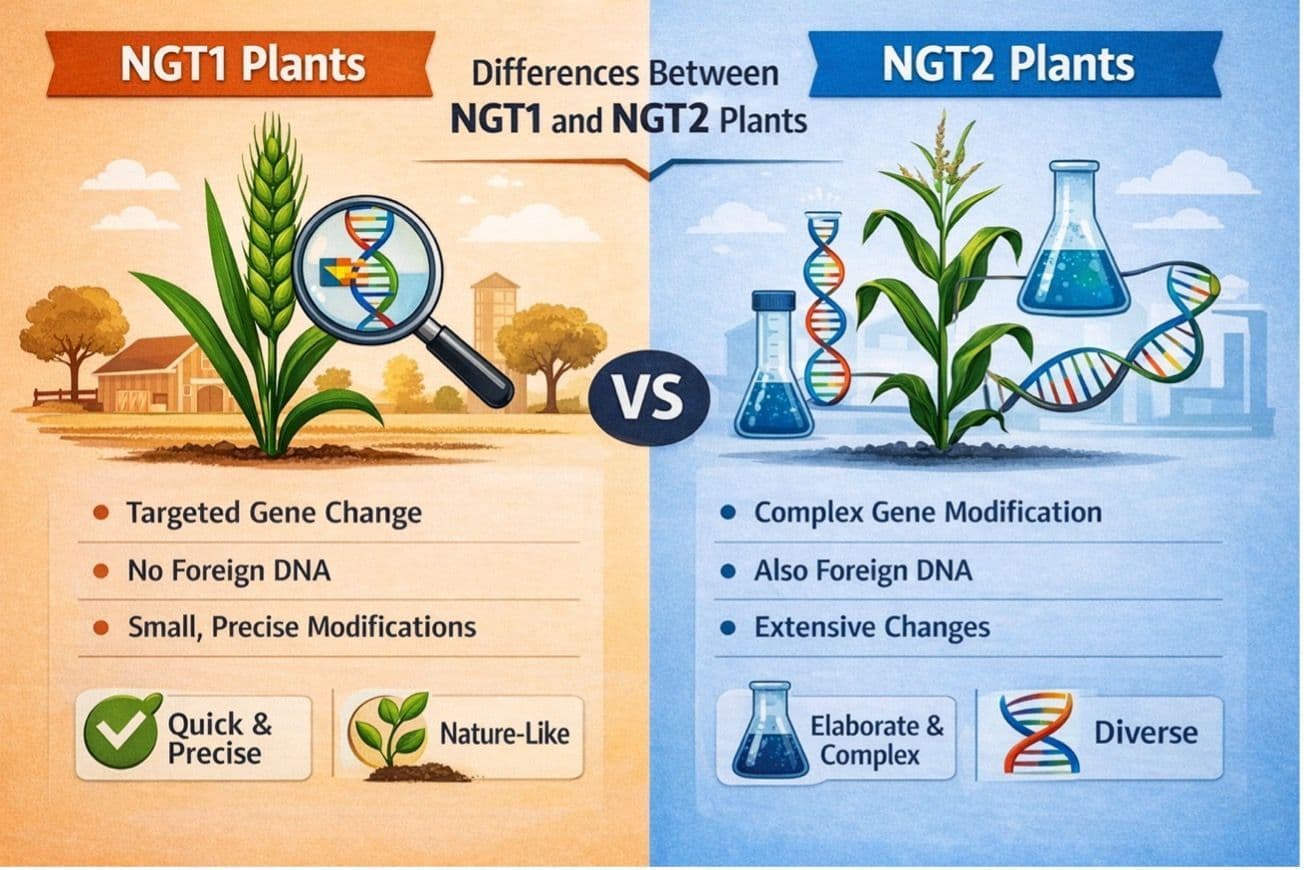
New legal framework for NGT (new genomic techniques) plants and easing concerns on the issue of their patentability
Just before the end of 2025, the EU Parliament and the EU Council reached an exciting agreement that should lead to a novel uniform legal framework for new genomic techniques (NGT).